Subcontractor management: definition and challenges

Master your subcontractors with a structured approach: selection, audits, contracts, quality monitoring, and KPIs. Reduce non-conformities, risks, and costs while strengthening compliance and operational excellence.
What is subcontractor control?
Subcontractor control refers to the set of practices used to control the quality, compliance, and performance of external service providers.
It includes selection, contracting, operational monitoring, and continuous evaluation.
Why is it essential today?
Because outsourcing transforms the industrial value chain, and your suppliers directly impact your company's safety, regulatory compliance, and reputation.
How do we put this into practice?
Start by mapping your critical third parties based on product risk, process criticality, and purchasing volume.
Next, formalise minimum technical and quality requirements.
This preliminary work allows you to define an appropriate scope of control and prioritise audit and surveillance efforts.
In summary: controlling your subcontractors means reducing operational risks and protecting company value.
Strategic challenges for quality, compliance, and image
What strategic challenges affect subcontractor control?
Firstly, product quality: a defect at a subcontractor can lead to massive non-conformities at the factory output.
Secondly, compliance: ISO standards, sector-specific requirements, and contractor liability impose formal checks.
Thirdly, image and continuity: a supplier incident can jeopardise customer trust and production deadlines.
What do you gain by investing?
A reduction in non-quality costs, better control of deadlines, and the ability to demonstrate compliance during customer audits.
We advise you to integrate these challenges into your quality committee and strategic purchasing plan, in order to allocate resources rationally.
Conclusion: transforming subcontractor management into a strategic lever improves resilience and competitiveness.
Regulatory framework and applicable standards
ISO standards and industrial certifications
Subcontractor control is based on international standards.
ISO 9001 requires control of outsourced processes and traceability of responsibilities.
ISO 45001 and ISO 14001 are relevant if your subcontractors deal with health & safety or environmental risks.
For certain sectors, specific certifications (aerospace AS/EN 9100, automotive IATF 16949) include reinforced requirements on the supply chain.
What to do operationally?
Request current certificates and audit reports.
Include a minimum certification requirement in tenders for critical lots.
Tip: prioritise verifying evidence and recent reports, not just the presentation of a certificate.
Legal obligations and contractor responsibilities
The law can make you liable for the shortcomings of your subcontractors.
In France, the ordering party must ensure respect for labour laws, safety at work, and certain duty of care obligations.
Regarding health or environmental aspects, civil and criminal liability can be incurred in the event of a failure of control.
How to reduce liability?
Formalise clear contractual clauses, implement effective monitoring systems, and retain proof of actions taken.
Important: documenting your subcontractor control processes significantly reduces legal risk during an inspection or an incident.
Qualification and selection process
Technical, financial, and CSR criteria
Subcontractor control begins with rigorous qualification.
Evaluate technical capability (resources, certifications, metrology skills), financial stability, and CSR criteria (health & safety, emissions, ethics).
Assign a weight to each criterion according to the criticality of the lot.
How to structure the evaluation?
Build a consistent, weighted scoring grid.
Integrate verifiable evidence: test reports, CSR reports, tax and social security certificates.
Practical advice: automate document collection via a platform to avoid errors and speed up decisions.
Tender, initial audit, and scoring
The tender must reflect your control requirements.
Present clear specifications with pass/fail criteria and scored criteria.
Plan an initial audit with shortlisted candidates to verify stated capabilities on site.
Use a consolidated scoring system to rank and select.
What to check during the initial audit?
Compliance of procedures, condition of equipment, staff competence, and traceability of parts.
Goal: transform evaluation into actionable data to feed your supplier dashboard.
Contractualisation and essential clauses
Drafting a template contract
The contract formalises subcontractor control and sets mutual obligations.
A contract template must integrate quality specifications, traceability requirements, audit modalities, and SLAs.
Ensure clarity of responsibilities in the event of non-conformity.
How to write concretely?
Use precise formulations for tolerances, rejections, and deviance management.
Provide technical appendices and a common documentation repository.
Tip: centralise contractual documents and amendments to guarantee the traceability of commitments.
Compliance clauses, penalties, and SLAs
Compliance clauses and SLAs reflect expected performance.
Include measurable indicators (non-conformity rate, delivery time, rejected parts rate) and associated penalties.
Provide progressive mechanisms: corrective actions, penalties, then termination in event of recurrence.
How to make them effective?
Define clear calculation rules and pool evidence (audit reports, non-conformity slips).
Important: favour incentive clauses and correction plans rather than purely punitive measures to preserve the supplier relationship.
Setting up monitoring and quality control
Surveillance plan: frequency and scope
A documented surveillance plan is at the heart of subcontractor control.
Determine the frequency of checks based on risk, product criticality, and supplier history.
Specify the scope (incoming checks, process audits, final checks) and accepted methods.
How to prioritise checks?
Adopt a risk-centric approach: the higher the risk, the more the frequency and depth of checks increase.
Advice: start with critical suppliers and industrialise the plan before extending to medium risks.
On-site and digital audit methods
Combine on-site audits and digital controls for effective subcontractor control.
The on-site audit allows you to observe practices, maintenance, and non-conformity management.
Digital tools (mobile checklists, photo records, tracking platforms) facilitate traceability and reporting.
How to organise the audit?
Prepare an audit plan, share the checklist before the visit, and record non-conformities in a structured report with corrective deadlines.
Practical reminder: involve your quality and purchasing teams to capitalise on the analysis and resolution of gaps.
Management tools and technologies
SaaS platforms, ERP, and dashboards
Subcontractor control today relies on tools that centralise information and automate workflows.
Opt for a dedicated SaaS platform for managing providers capable of aggregating certificates, audit reports, and non-conformities.
Integrate it with your ERP to link orders, incoming receipts, and piece-by-piece traceability.
Prioritise features: mobile checklists, document management, APIs for automatic exchange and alerting.
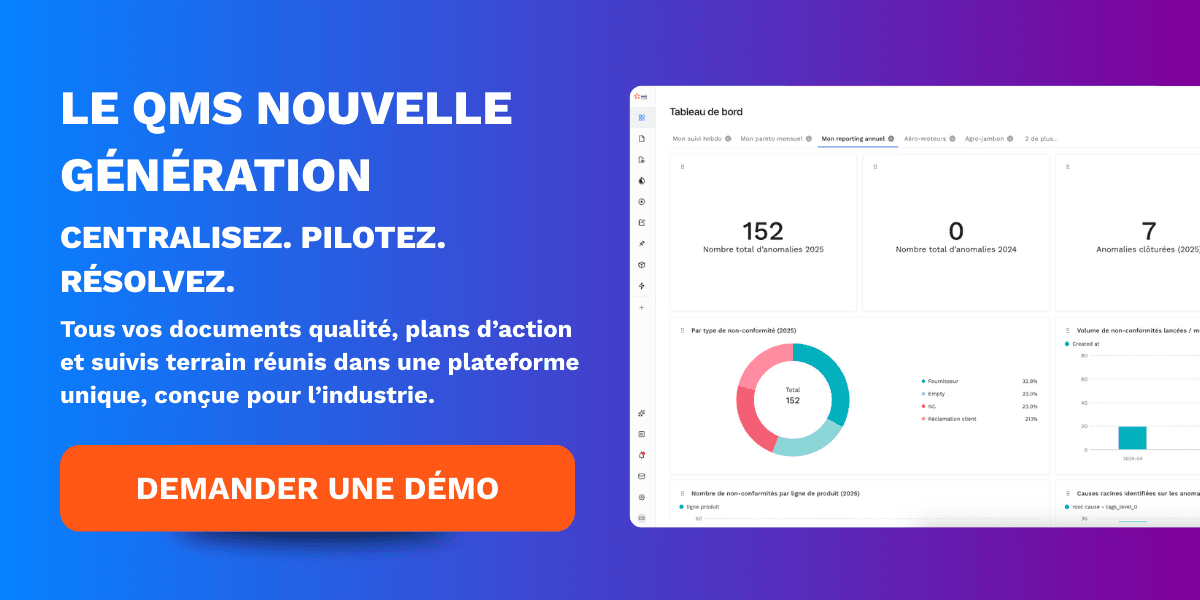
A supplier dashboard must display scoring, KPIs, and open corrective actions in real time.
Thanks to these tools, supplier quality control becomes accessible to purchasing, quality, and production.
At Yxir, we recommend automating document collection to speed up qualification and reduce errors.
Using artificial intelligence for analysis
AI transforms subcontractor control by making predictive analysis and anomaly identification actionable.
Use machine learning for a supplier risk scoring that combines financial data, non-conformity history, and lead times.
Use NLP to automatically extract key information from certificates and contracts.
Computer vision helps with quality control by analysing photos of parts and detecting recurring defects.
However, pay attention to data quality: guaranteeing governance and traceability of sources is essential.
We advocate a gradual deployment: start with analytical modules that complement human auditing before automating critical decisions.
Key performance indicators
Non-conformity, delay, and non-quality cost KPIs
To steer subcontractor control, build a set of simple, actionable subcontractor KPIs.
Measure the non-conformity rate (by batch or piece) and DPPM (defects per million parts).
Track delivery times (OTD), mean time to resolution of discrepancies (MTTR), and SLA compliance rate.
Calculate non-quality costs: reworks, customer returns, production losses.
Add process indicators: rate of audits passed, % of fixes closed on time, and CSR score.
Set clear thresholds and escalation rules so that provider management becomes proactive rather than reactive.
Monitoring and reporting dashboard
The dashboard is the cement of subcontractor control: it must allow immediate reading of risks.
Display a supplier risk score, KPI trends, and priority alerts.
Allow drill-down from a global indicator to the audit report and concerned parts.
Generate automated reports for management, customer audits, and supplier reviews.
Integrate views by category (critical, medium, low) to prioritise controls.
At Yxir, we insist on simplicity: a clear dashboard speeds up decisions and strengthens provider management.
Conclusion
To close, remember the essentials: subcontractor control is not an administrative burden but a lever for competitiveness.
A structured approach reduces non-conformities, lowers non-quality costs, and secures the supply chain.
Start by mapping critical third parties and formalising requirements in your specifications.
Next, implement a rigorous qualification (scoring, initial audit, documentary proof) before any contracting.
Be sure to integrate measurable SLAs, audit clauses, and clear escalation rules into contracts to transform supplier risk into a manageable indicator.
Industrialise tracking with a SaaS platform integrated into your ERP, mobile checklists, and a unified dashboard.
Measure simply but effectively: non-conformity rate, DPPM, OTD, and MTTR are KPIs that lead to quick and relevant decisions.
Incorporate AI and computer vision gradually for risk scoring and predictive analysis, while keeping strict data governance.
Manage by sprints: prioritise critical suppliers, test your processes on a small scale, then industrialise.
Train purchasing and quality teams, involve production, and share KPIs with subcontractors to co-construct action plans.
To go further, start tomorrow with three simple, concrete actions: map your critical third parties, automate document collection, and define your 3 priority KPIs.
We support quality and production departments in this transformation, from defining specifications to deploying an operational dashboard.
Contact us for a demonstration or to draw up a roadmap adapted to your industrial context.
By adopting this framework, third-party management, service provider steering, and supplier quality control become robust, traceable, and value-creating processes.
Subcontracting management ceases to be a risk and becomes a strategic advantage.
Continue reading
The latest innovations in Industry 4.0