Instantly identify the best decision for each quality deviation
When quality deviation decisions are conservative due to time pressure, they slow down production or leave parts in quarantine — reducing your OEE. Yxir immediately suggests the right decision for each new deviation, based on the context of your past cases, so you can decide quickly and with documented justification.
The solution proposed by Yxir offers a genuine platform that centralises and simplifies our non-conformance management processes.
The AI features on the history allow us to identify issues more quickly, thereby facilitating an immediate resolution without starting from scratch, but by building on work already done or on a knowledge base.
Quality Manager
Safran Landing Systems
Quality becomes a bottleneck when it cannot keep pace with production rates
Quality processes rely on manual searches and archives that cannot be utilised. As a result, due to a lack of time, teams are forced to make decisions based on their experience, without carrying out the comprehensive analyses that would underpin their decisions.
The decision must be made today
Production targets must be met, even when a deviation occurs. To manage the risk, the safest option is to call a senior expert — who is already overloaded.
An overly conservative decision has real consequences
Unnecessary scrap is waste. One analysis too many is lost time. But above all, it gradually erodes the customer relationship — until it ends it.
Resolution starts from scratch every time
Investigating takes time because teams start from a blank page — without knowing whether the problem has already been solved, by whom, and how.
A bad decision is an anomaly that becomes a risk at every level: from production line performance right through to customer relations.

How Yxir accelerates deviation decisions to support production ramp-up
Yxir structures your data in order to leverage it with AI.
Yxir immediately identifies past and similar cases
As soon as a deviation is detected, Yxir analyses its similarity with cases in your history to instantly identify the most relevant precedents.
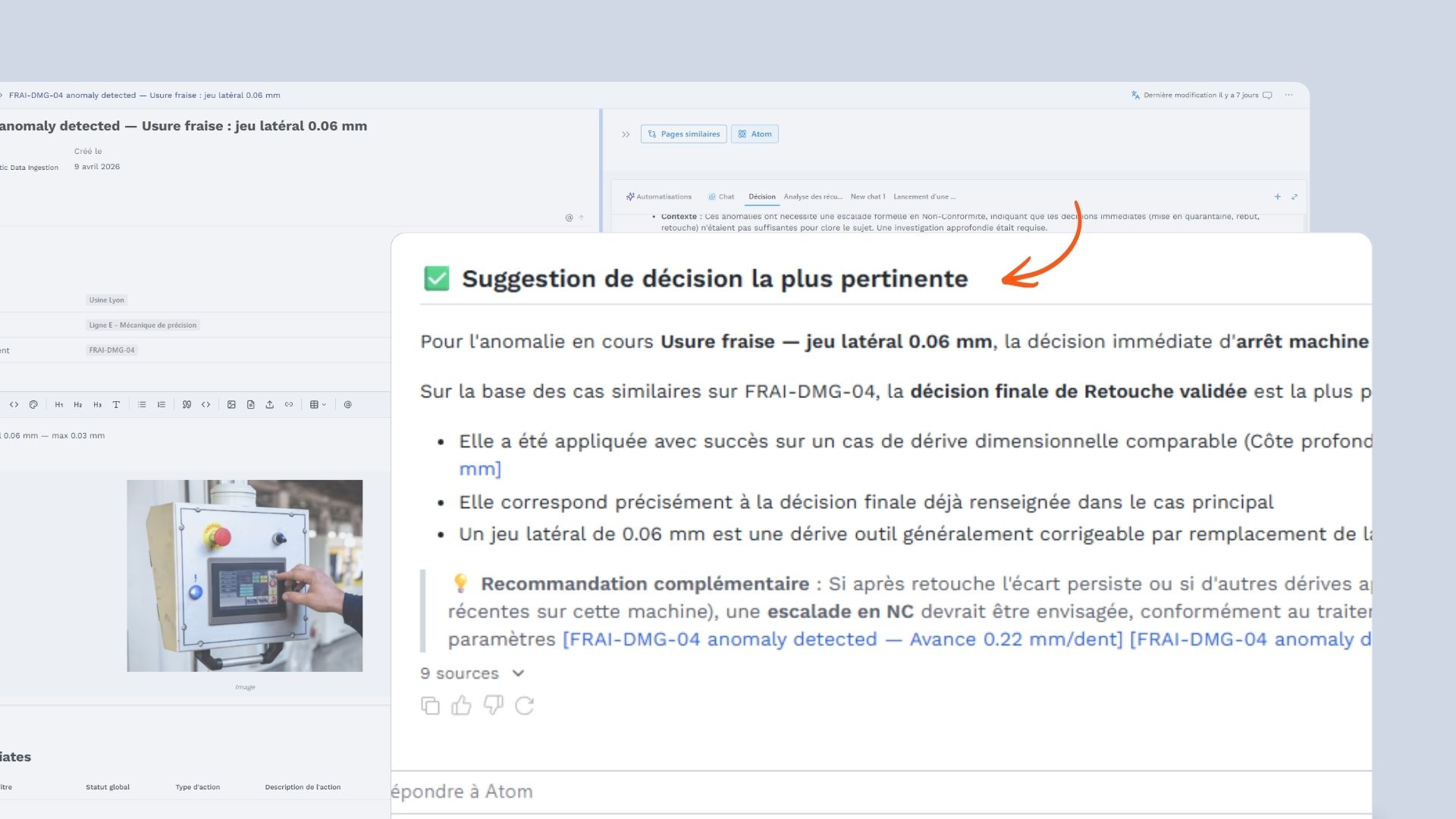
AI shows what the best decision is based on your history
By analysing past cases, AI deduces what worked previously and is applicable to this new case — and argues for the most relevant decision to take.
AI suggests directly applicable corrective actions
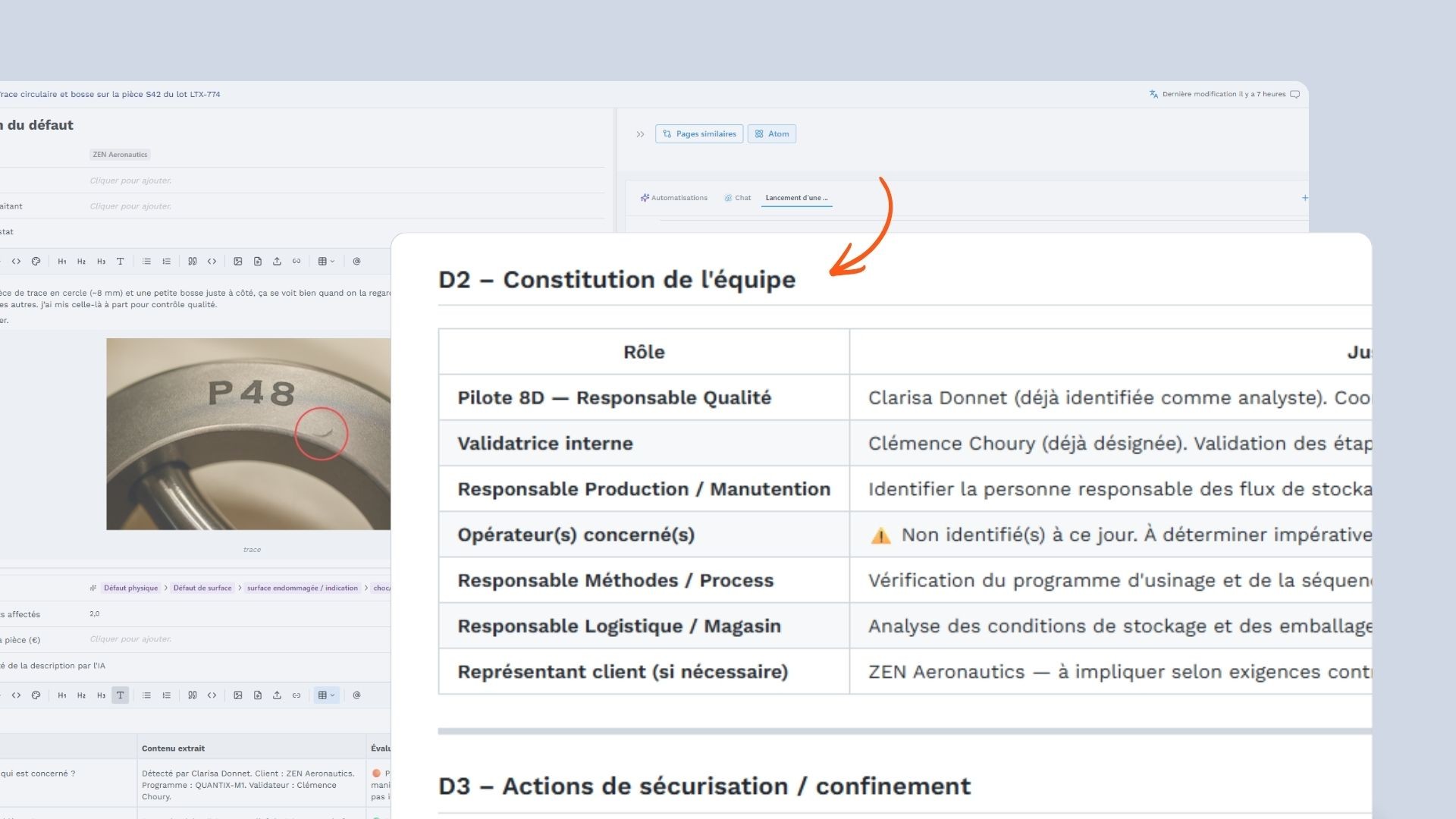
Based on past cases and all exploitable resources in your data, AI generates a concrete, precise action plan: required experts, resolution guidelines, and a schedule for each step.

For Quality teams
To shift from a reactive to a proactive approach, Yxir enables:
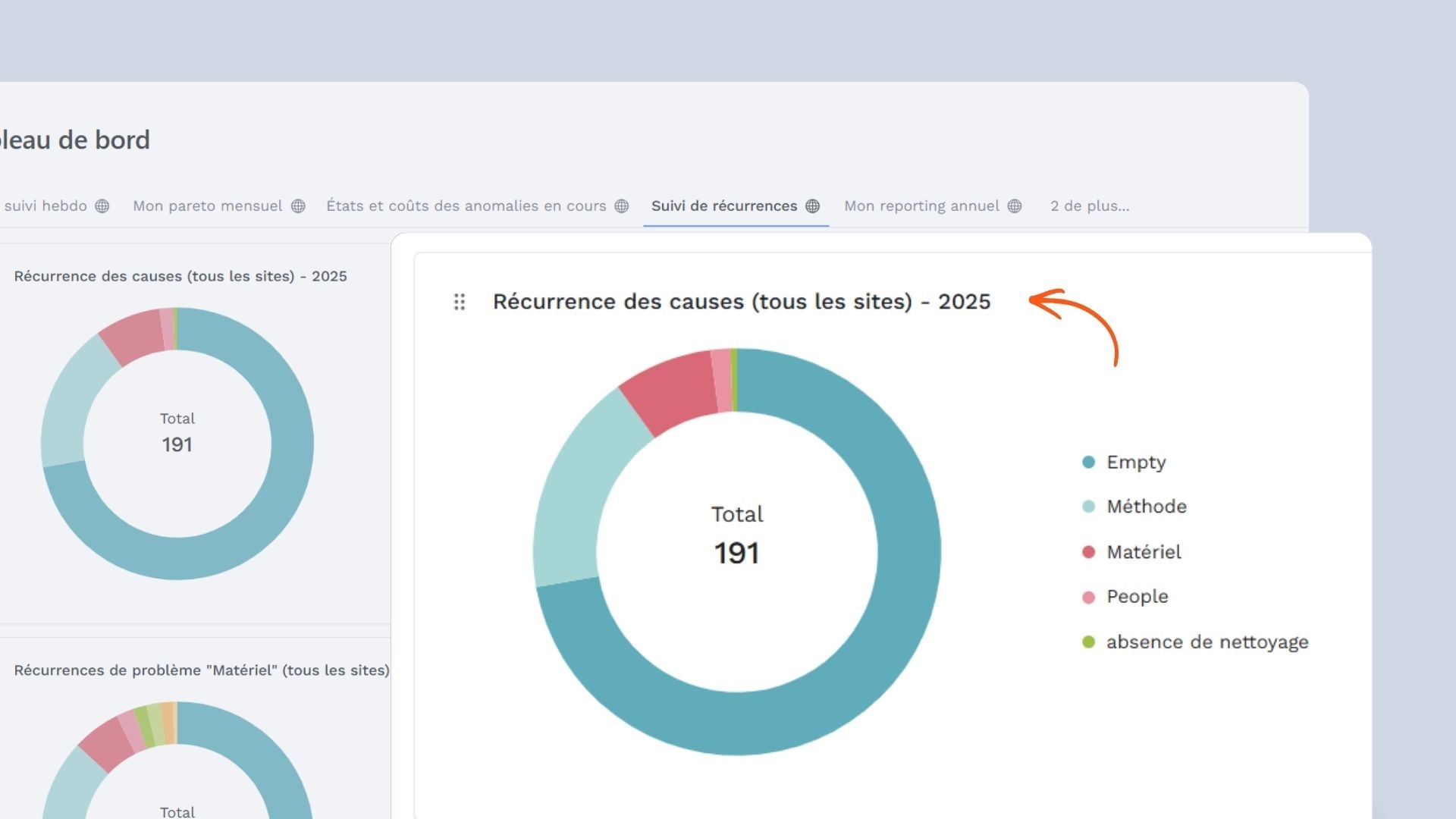
Automatic detection of recurring issues
AI-powered root cause analysis
Faster 8D analyses
It's way more ergonomic to report a new anomaly on Yxir
Previously, from one Bernard Controls site to another, the same problems recurred even though one site had already found the solution, but the others were unaware of it.
User
Bernard Controls
Thanks to Yxir, I found a non-conformity that was from 7 years ago.
I would never have been able to identify it on my own. It was extremely helpful!
Quality Manager
Safran Landing Systems
Faster decision-making to keep up with production rates
Because every decision is based on the organisation’s actual historical data, not on the individual memory of an expert.
Shorter time between detection and decision
Less time between detection and decision — the right history surfaces in seconds, the engineer decides faster, and the part returns to the line sooner.
Reduced risk associated with hasty decision-making
Less risk from rushed decisions — choices are justified by history. If there is a risk of recurrence or a customer complaint, it is addressed upstream.
Recurring issues addressed before they pile up
Recurrences addressed before they accumulate — the same types of deviations are identified from the second occurrence. Root causes are treated before volume becomes unmanageable.
Manufacturers making quicker and better decisions
From aerospace to energy, quality and production teams use Yxir to make swift, data-driven decisions based on their historical records to address non-conformities safely.