Just-in-Time (JIT): 2025 guide to implementing lean manufacturing and optimising production

Just-in-Time JIT: definition and challenges for your production
Just-In-Time (JIT) is a production strategy aiming to provide the right part, at the right time, in the right quantity.
Would you like to reduce inventory while improving the quality and responsiveness of your supply chain?
This approach, derived from lean manufacturing, is based on simple yet powerful principles: pull flow, Kanban, and minimum inventory.
In this article, you will discover how just-in-time JIT transforms industrial production, from aeronautics to automotive.
We will explain the historical origins, key principles, concrete gains in terms of cost reduction and quality performance, as well as the risks to anticipate, such as supplier dependence or flow disruptions.
You will also learn, step-by-step, how to drive a JIT approach: diagnosis, flow mapping, Kanban implementation, and choice of tools (ERP, dashboards, simulation).
Finally, we will address the conditions for success: supplier partnership, KAIZEN, sensors, and Industry 4.0 and AI solutions to secure the just-in-time flow.
Ready to move from concept to action and manage a high-performance just-in-time flow?

Origins and Foundations of Just-In-Time JIT
Why did just-in-time JIT change industrial production?
The answer begins in post-war Japan at Toyota, which developed a system aimed at producing only what is needed, when it is needed.
JIT was born to reduce inventory, improve quality, and synchronize flows between workshops and suppliers.
It relies on the principles of Lean Manufacturing, which aim to eliminate waste and maximize value for the customer.
Understanding these foundations helps you avoid common implementation mistakes: wanting to reduce inventory without making flows reliable.
Just-in-time JIT is not an extreme inventory reduction for its own sake.
It is a set of practices combining pull flow, rhythm (takt time), standardization, and continuous improvement.
Before starting the process, verify the stability of demand, the repeatability of processes, and the ability to collaborate with your suppliers.
Without these prerequisites, JIT becomes a risk rather than a performance lever.
Key Principles of the Just-In-Time Flow — JIT
What rules structure the just-in-time flow in just-in-time JIT?
The just-in-time flow is based on synchronization between customer needs and production.
This means steering by demand, reducing work-in-progress, and limiting variability.
Three principles emerge: a pull flow, inventory reduction, and continuous improvement.
Pull flow avoids production based on forecasts.
Standardization and visual management make discrepancies visible and actionable.
Just-in-time JIT also requires a controlled rhythm (takt time) to align capacity and demand.
Finally, operational governance must include replenishment rules, threshold limits, and regular reviews.
This framework allows you to translate the goal of "zero unnecessary stock" into concrete, controllable, and measurable routines.

Pull Flow and Kanban — Just-In-Time JIT
Pull flow is at the heart of just-in-time JIT.
It replaces "push" logic with "pull" logic: each operation only produces what the next operation requests.
Kanban is the most widespread tool to materialize this demand.
A Kanban can be a card, a tote, or an electronic signal that triggers production or replenishment.
To implement a Kanban, calculate the takt time, define lot sizes and replenishment points, then test in a short loop.
Stock and flow visualization accelerates the detection of disruptions.
In the field, a well-tuned Kanban system reduces work-in-progress and improves responsiveness, without necessarily eliminating all safety: planning for exception rules is essential.
Minimum Stock and Elimination of Waste — Just-In-Time JIT
Reducing stock is not an end in itself in just-in-time JIT.
The challenge is to eliminate waste that masks real production problems.
Identify the types of waste (overproduction, waiting times, unnecessary transport, overprocessing, excessive inventory, unnecessary movement, defects).
Then, apply methods like 5S, SMED, and standard work to stabilize operations.
Inventory reduction reveals malfunctions: it is a signal, not an end.
To succeed, combine stock reduction with mitigation plans (critical buffer stock, multi-sourcing).
Thus, minimum stock becomes a lever for improvement and not a permanent source of operational stress.

Advantages and Benefits of Just-In-Time JIT
What gains can be expected from a just-in-time JIT approach?
The benefits are economic and qualitative: reduction of storage-related costs, improved delivery times, higher quality through early defect detection, and better asset turnover.
JIT improves cash flow by reducing tied-up stock value.
It also makes the factory more agile in the face of demand variations.
To measure these benefits, track clear indicators: inventory days, lead time, customer service rate, and OEE.
Measuring before/after allows you to guide the project and justify investments.
Finally, the gains are sustainable when the approach is accompanied by a training plan and an adapted management system.
Limits and Risks to Anticipate with Just-In-Time JIT
Just-In-Time JIT carries risks if the right conditions are not met.
Supply chain disruptions, high demand variability, and unreliable suppliers can cause costly production stops.
Dependence on a few suppliers increases vulnerability.
JIT accentuates the bullwhip effect if information is not shared in real time.
To limit these risks, integrate continuity rules: operational safety, contingency plans, multi-sourcing, and shared visibility of forecasts.
Do not sacrifice resilience for the sake of inventory optimization.
Rigorous management and incident response scenarios are essential for just-in-time JIT to remain an asset and not a weakness.

Conditions for Success of a JIT Approach — Just-In-Time JIT
What conditions must be met for just-in-time JIT to work?
Success relies on demand stability, process reliability, and cross-functional governance.
This requires clear steering rules, trained teams, and continuous communication with suppliers.
The IT tooling must ensure flow predictability and visibility.
Cultural change is just as crucial: management must support the process and encourage continuous improvement.
Without these conditions, JIT quickly becomes a source of instability.
First, invest in standardization, preventive maintenance, and the quality of the information flow.
These foundations will allow you to industrialize just-in-time JIT sustainably.
Supplier Management and Partnership — Just-In-Time JIT
The supplier relationship is a pillar of just-in-time JIT.
JIT requires fine synchronization between your needs and your suppliers' capacities.
To achieve this, establish partnership contracts, share reliable forecasts, and set up common performance indicators.
The practice of Vendor Managed Inventory (VMI) or scheduled call-offs can reduce friction.
Promote performance audits and shared improvement plans.
In the case of critical suppliers, develop alternatives and continuity plans.
Collaboration based on trust and transparency transforms just-in-time JIT into a competitive advantage rather than a vulnerability.

Continuous Improvement and Kaizen — Just-In-Time JIT
Continuous improvement is the oxygen of just-in-time JIT.
Kaizen, targeted workshops, and PDCA allow you to transform the problems revealed by stock reduction into sustainable gains.
Organize short Kaizen events to address the root causes of disruptions or non-conformities.
Standardize best practices and document them as work instructions.
Set up daily routines (Gemba walks, stand-up meetings) to maintain discipline.
Train your teams in Lean tools so that everyone becomes an actor in the improvement process.
It is this dynamic that sustains the benefits of just-in-time JIT and guarantees adaptability in the face of market developments.
Management Tools and Indicators — Just-In-Time JIT
To industrialize just-in-time JIT, tooling is just as important as the methodology.
We recommend articulating operational synchronization and digital visibility to drive an efficient just-in-time flow.
The tools must make stock, work-in-progress, and cycle times visible in real time.
They must also integrate supplier management and traceability to reduce the bullwhip effect.
In practice, a combined solution of ERP + supply chain modules + visual management tools offers the best performance.
The goal: transform information into action — automatic triggering of Kanban, disruption alerts, and scenario simulations.
Finally, remember that the tool is only powerful if the indicators are relevant and shared by all stakeholders.
Measure before/after to prove the gains of JIT and adjust your replenishment rules.
ERP Solutions and Supply Chain Modules — Just-In-Time JIT
A modern ERP is at the heart of driving just-in-time JIT when complemented by supply chain modules and supplier APIs.
These modules manage forecasting, light MRP, VMI, and call-offs synchronized with electronic Kanbans.
They must allow for "what-if" simulation, critical buffer stock management, and order prioritization based on takt time.
The benefits: shorter lead times, better visibility of goods-in-transit, and automated replenishment management.
We advise integration with anomaly detection tools and, if possible, AI functions to predict shortages and recommend actions.
Prefer modular and open solutions to facilitate multi-sourcing and supplier collaboration.
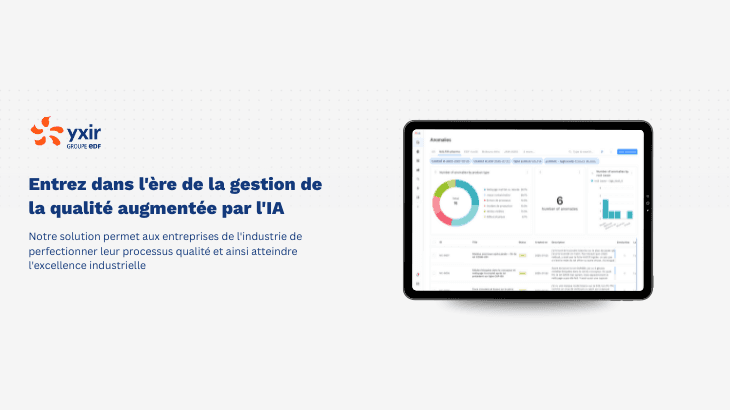
Dashboards and Performance Indicators — Just-In-Time JIT
KPIs turn the JIT setup into a manageable and actionable system.
For just-in-time JIT, we recommend a synthetic and daily dashboard accessible to production, purchasing, and supply chain.
Key indicators: inventory days, total lead time, customer service rate, OEE, stockout rate, and work-in-progress variation.
Complement this with Lean metrics: number of active Kanbans, changeover time (SMED), and process compliance rate.
Display these KPIs in real time and contextualize them by line or product family to quickly detect anomalies.
Integrate alert thresholds and preconfigured action plans so that the feedback of information leads to immediate counter-measures.
Thus, the dashboard becomes the central tool of pull flow and continuous improvement in your JIT approach.
Conclusion:
In summary, just-in-time JIT is not an end, but a strategic lever to transform your production and your supply chain.
It requires a combination of principles: pull flow, Kanban, minimum stock, standardization, and continuous improvement (KAIZEN).
Without these pillars, inventory reduction becomes dangerous; with them, it reveals malfunctions and creates sustainable gains.
To succeed, start by stabilizing your processes and measuring your starting situation.
Calculate the takt time, map the flows, identify critical families, and implement physical or electronic Kanbans.
Define clear KPIs — inventory days, lead time, customer service rate, OEE — and follow them routinely to direct actions.
Anticipate and secure.
Provide buffer stocks for critical components, develop **multi-sourcing**, formalize continuity plans, and share real-time information with your suppliers.
Thus, you limit the bullwhip effect and transform the supplier relationship into a true logistics partnership.
Do not neglect the human dimension.
The JIT approach requires cross-functional governance, teams trained in Lean methods (5S, SMED, standard work), and daily routines (Gemba, stand-up).
The KAIZEN culture must be supported by management to sustain the gains.
Technology and tools complement the method.
A modern ERP, supply chain modules, electronic Kanbans, and integrated dashboards make the flow visible and actionable.
Sensoring, the digital twin, and AI are now coming in to secure and anticipate disruptions, enabling "what-if" simulations and automatic recommendations.
As for results, expect concrete and measurable impacts: a notable reduction in tied-up inventory, improved lead times, and better quality through early defect detection.
In many industrial cases, the structured implementation of JIT enables significant inventory reductions and a visible return on investment within a few months, provided that methodology, tooling, and supplier partnerships are combined.
To move from concept to operational, adopt a progressive approach: diagnosis, pilot experiments, standardizing best practices, expansion, and automation.
We support quality managers and production directors through each of these stages, integrating KPIs, ERP tools, and AI solutions to guide a reliable and resilient just-in-time flow.
Ready to secure your flow and optimize your inventory while improving quality and responsiveness?
Contact us for a demonstration of the Yxir platform and to build together a JIT plan adapted to your factory and your suppliers.
Continue reading
The latest innovations in Industry 4.0