7 (actually) concrete ideas to centralise your quality data in manufacturing
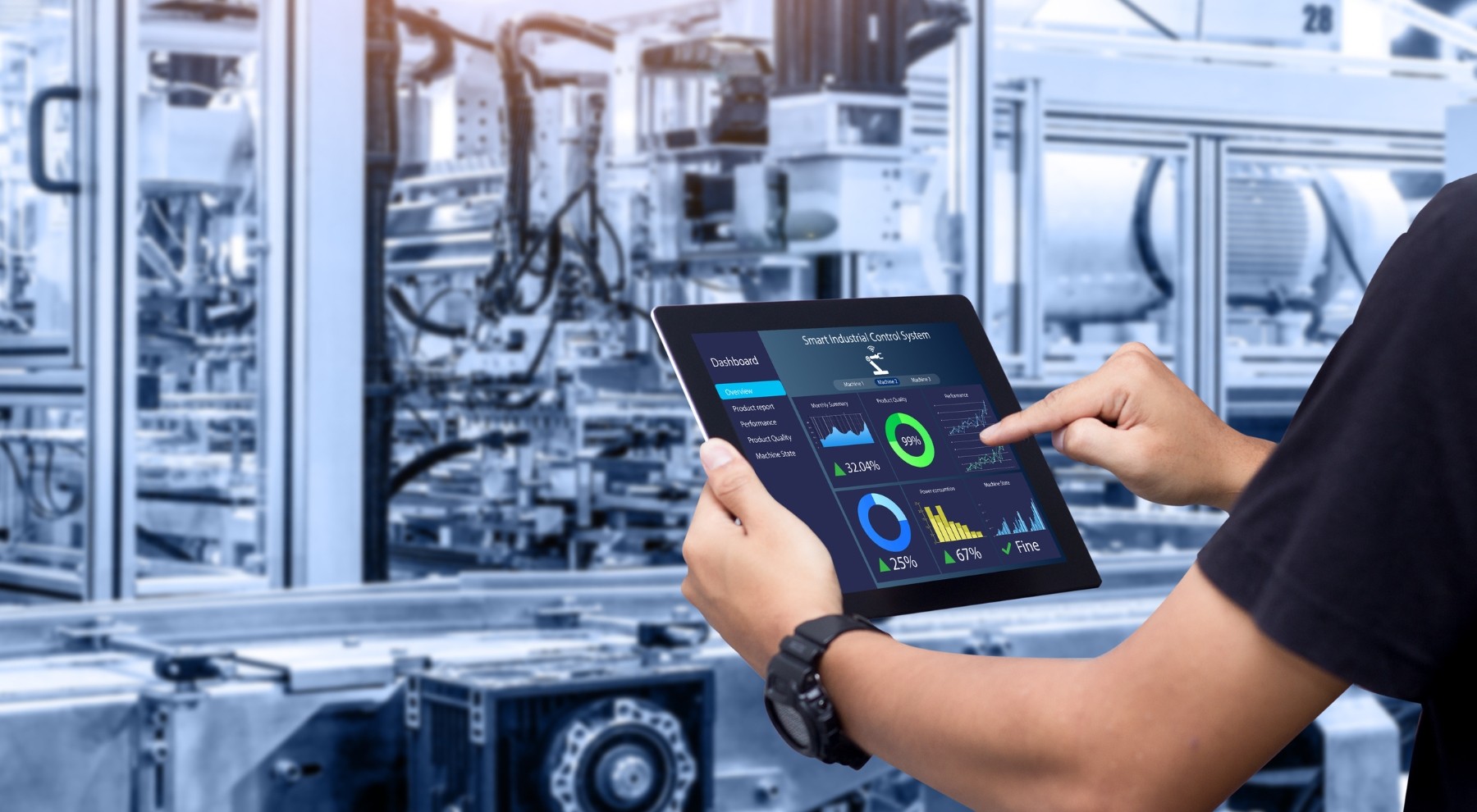
The centralisation of quality data in industry is the source of faster, more reliable decision-making.
“In our factory, quality data surely exists somewhere… you just have to find in which file, on which disk and with whom.” 😂
Today, data centralisation is a real question when discussing quality management in industry.
Data is there, everywhere: on production lines, in audit reports, in the Excel files of field teams, in messages from suppliers… but it is scattered, siloed, and sometimes even forgotten.
Under these conditions, it is impossible to make reliable decisions, improve responsiveness, or anticipate non-conformities.
What is the consequence on the ground?
Wasted time, a partial view, and often improvement opportunities that slip through the cracks.
You might recognize your company in this setup. Don't panic, solutions exist.
Centralising quality data makes it possible to bring solutions to light, to make data speak and transform it into concrete actions.
In this article, you will discover how to unite your quality data and accelerate your continuous improvement.
Do you want fewer Excel spreadsheets, less stress, and more control over your quality indicators?
Then, buckle up, here we go!
Understanding data centralisation in industry
Are you juggling disparate data from multiple software packages, factories, or teams with various processes? 🙄
In industry, analysis is becoming finer, volumes of quality data are exploding, and teams must manage faster with greater rigour.
Faced with these challenges, centralising quality data must make it possible to gather, structure, and exploit all critical data in a usable repository.
This means fewer silos, fewer manual errors, smooth reporting, and a global view of processes.
But beware: this approach requires structured choices regarding tools, technical architecture, and governance.
Let’s discover together why and how to succeed in this structuring project, what concrete benefits you can derive from it, and how to avoid the main pitfalls.
The promise is simple: gather scattered data, centralise it in a reference tool, and exploit it to multiply performance.

What is data centralisation
Gathering quality data consists of grouping all data dispersed throughout the organisation into a single point of access.
This point can be a data warehouse, a data lake, or a hybrid platform, depending on your uses.
In industry, this means aggregating information from ERPs, MES, quality systems (QMS like Yxir), maintenance tools, CRMs, and even industrial sensors (IoT).
This consolidation aims to improve data accessibility, consistency, and usability.
This centralisation also encompasses format unification, cleaning, enrichment, authorization management, and data governance.
It creates a single foundation for analysis, automation, or prediction.
This is the prerequisite for moving from "reactive" management to a structured, proactive, "data-driven" approach.
Why centralise data in quality processes
Centralising data in quality processes means facilitating the fluidity and robustness of information at all levels ☺️
Today, without centralisation, quality teams spend a considerable amount of time searching for, correlating, and verifying their data.
This leads to slow, sometimes biased decisions and unnecessary administrative overload.
With a data centralisation system, you create a single source of truth — up-to-date, reliable, comprehensive — on quality performance across the factory or group.
This allows for better traceability, quick reaction in the event of an anomaly, and an enhanced capacity to anticipate deviations.
Centralisation also facilitates the standardisation of quality indicators, key for harmonised management between sites or divisions.
During an audit or certification, this changes everything: evidence is available in a few clicks, gaps are identifiable at the source, and action plans are based on solid data.
More than that, a centralised data environment is the prerequisite for any advanced analysis strategy, automated reporting, or AI integration, which is currently exploding in industry.
Key benefits of centralising quality data
Improved reliability and traceability of details
Information reliability and traceability are two pillars of any high-performing quality system 💪
When data is scattered across different tools or Excel sheets, the risks are numerous: duplicates, human errors, loss of history, inconsistencies between versions.

Data centralisation offers rigorous consolidation, with clear management rules, shared repositories, and traceable histories.
Every piece of information becomes reliable, contextualised, and traceable over time, regardless of the emitting site or department.
In the event of a customer audit or post-incident analysis, the ability to find exactly who entered what, when, and with what supporting documents becomes a critical issue.
Centralisation also allows you to trace each quality data point to its origin (machine, operator, system), facilitating root cause analyses.
This is also what makes a continuous improvement process truly driven by facts, rather than feelings, possible.
Finally, by gathering all of a company's data in the same place, we can quickly cross-reference information between production lines, sites, and countries. And thus save precious time in analyses and similarity identification.
In short, without reliable and centralised data, there is no robust quality management.
Operational efficiency gains and reduction of manual work
How many hours do your quality teams spend copying and pasting data, re-entering details, or manually consolidating files? 🤨
In the majority of cases, this figure is chilling.
Data centralisation allows you to automate these repetitive and time-consuming tasks.
Once flows are connected between applications and analysis tools, information flows automatically.
No need to export from the MES, reprocess in Excel, or monitor a shared sheet.
This translates into a massive gain in operational efficiency, but also a clear reduction in the risk of human error.
Beyond time saved, centralisation frees your teams for higher value-added tasks: analysis, coordinating action plans, improvement projects.
You also improve responsiveness: as soon as a quality deviation is detected, it is escalated in real-time to the relevant decision-makers, without latency or distortion from the chain of transmission.
Data centralisation is the catalyst for smooth, efficient, and sustainable digitisation of your quality processes.
Optimisation of audits and regulatory compliance
Internal audits, certification audits, or customer audits are often a source of stress 🥶
Accessing the right data, verifying processes, and justifying actions are all sensitive points.
By centralising your quality data, you build an easily auditable environment in a structured and secure manner.
You have complete traceability of records, deviations, corrective actions, and validations at your disposal.
Every field, every action is dated, historicised, and linked to a source.
This makes it possible to respond much more quickly to requirements such as ISO 9001, EN 9100, or any industry standard.
Regulators are also reassured: with a well-designed architecture (data catalogue, logging, access rights), you prove that your system complies with GDPR and cybersecurity requirements.
No more chasing files: everything is there, accessible according to defined rights, archived according to clear logics, ready to be exploited… or presented.
Faster decision-making thanks to centralised reporting
In an increasingly complex industrial environment, it is now about making the right decisions and making them fast 🏎️
And this is where a centralised reporting system radically changes the game.
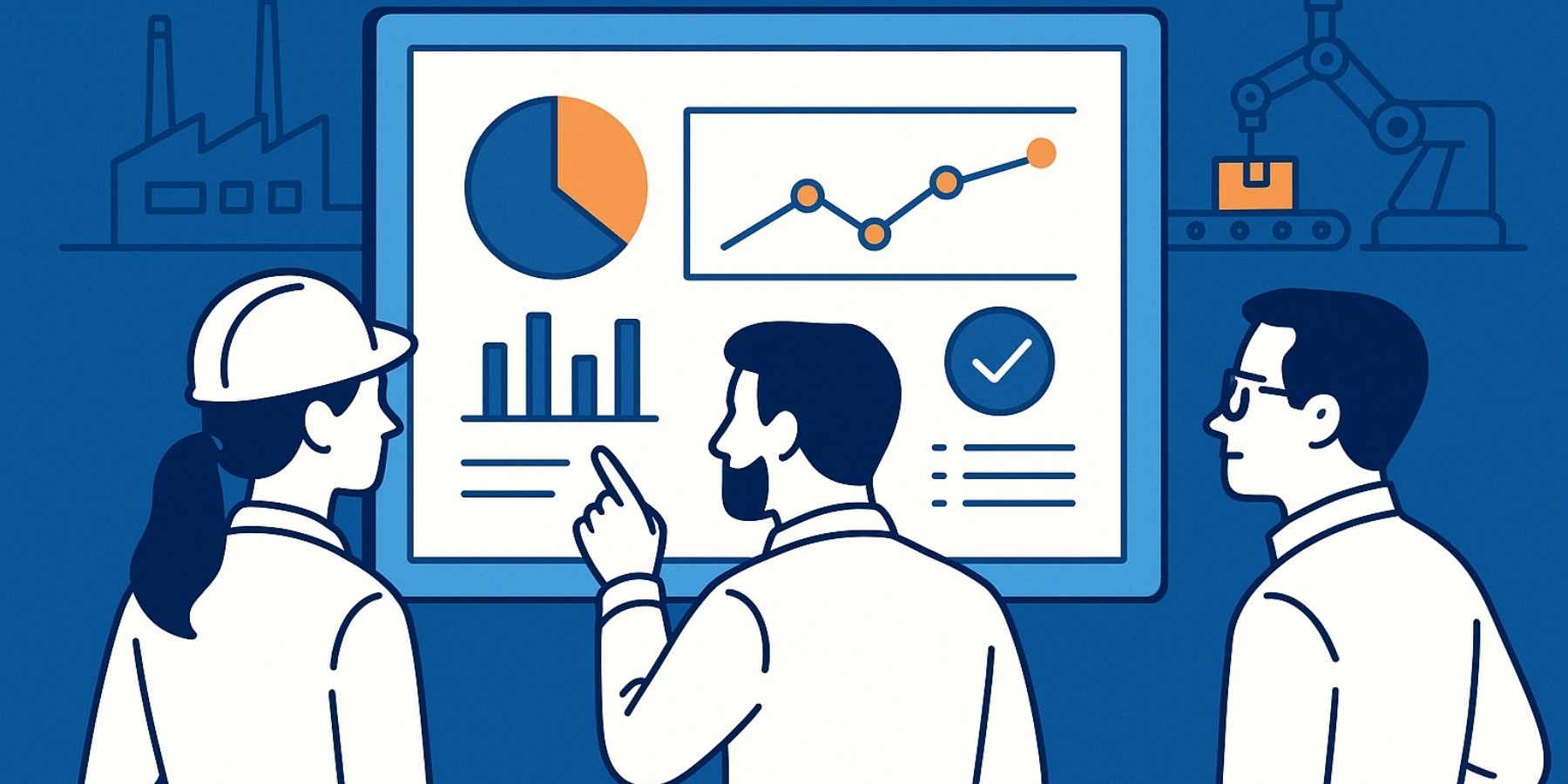
By consolidating all your quality details into a single environment – whether it is a data warehouse, a data lake, or a hybrid platform – you lay the foundations for a smoother, more responsive, and less biased decision-making process.
With data centralisation, you eliminate information gaps between departments.
Key indicators are calculated automatically, updated in real time, and accessible via dynamic dashboards.
No need to wait for each factory to send back its files: the view is immediate.
This is a critical gain for quality departments, but also for top management who can steer with consolidated and comparable data.
Centralised reporting is the prerequisite for making "data-driven decision making" a reality, not a wishful thought.
Continuous improvement and data-driven management
Data centralisation does not stop at operational optimisation or compliance 🤔
It opens up a powerful lever: that of continuous improvement driven by data.
By centralising your quality flows, you provide your teams with a structured reservoir of analyses, histories, and correlations that are finely accessible.
Trends become visible, root causes are detected faster, and actions have more impact.
A well-structured data centralisation platform allows you to set up reliable KPIs, homogeneous across sites or products, and to trigger smart alerts as soon as a threshold is crossed.
This is an ideal base for engaging your teams in a lean or Six Sigma approach.
And above all, it places quality management in a logic of continuous improvement, no longer reactive but proactive.
Finally, centralisation becomes a driver of competitiveness and innovation, far beyond quality management alone.
The challenges of data centralisation in industry
Data security, encryption, and GDPR compliance
The success of a data centralisation project also depends on rigorous management of security and regulatory issues.
Because grouping sensitive data into a single infrastructure means offering a central hub that must be perfectly protected.
First requirement: guarantee GDPR compliance (General Data Protection Regulation).
This involves fine access management, respecting the principle of minimisation, and implementing logging and traceability procedures.
Next, encryption is imperative: encryption of data in transit as well as at rest, secure connections, and storage on certified servers.
We systematically recommend integrating a Zero Trust architecture, with multifactor authentication (MFA), traffic segmentation, and API security.
It is also crucial to document the structure of centralised data through a data catalogue, specifying the purpose of each treatment, the owner, and the retention period.
Finally, hosting must meet high standards: ISO 27001, European Union location, SecNumCloud compliance for sensitive environments.
Ultimately, data centralisation comes with a trust mandate.
And this trust requires a security-by-design posture, integrated from the very start of the project.
System interoperability and limiting vendor lock-in
One of the greatest challenges of data centralisation in industry lies in the interoperability of current systems and the ability to avoid being locked in with a single vendor ☝️
On the ground, you juggle a heterogeneous ecosystem: ERP, MES, QMS, maintenance tools, Excel, legacy proprietary systems.
Not all of them have the same structure or data formats.
Centralising therefore requires designing an open architecture, capable of integrating these multiple sources without redevelopment.
To achieve this, APIs play a key role.
They ensure flexible and scalable connectivity between systems, without rigid dependence on a single solution.

A well-designed data bus or integration platform (ETL/ELT) also allows for the standardisation of flows, by cleaning and harmonising data before storage.
But beware of vendor lock-in.
Choosing a source solution that is too closed can become a major obstacle in the medium term.
This is why Yxir relies on a modular architecture, interconnectable with the main market standards, and exportable at any time: your data belongs to you.
Opt for solutions that support open standards (REST, JSON, OData…), have multiple connectors (SAP, Oracle, Salesforce, SQL…), and allow pain-free migration or reversibility.
This is the prerequisite for sustainable, scalable centralisation aligned with your future technology choices.
7 practical ideas to centralise your quality data in industry
1. Map your data sources before centralising them
Before even thinking about quality data centralisation in industry, we must face a simple truth: data is everywhere… and therefore nowhere 🤯
Between shared Excel files, printed non-conformance reports, quality alert emails, and indicators stored in an MES or an ERP, most companies live in a permanent state of fragmentation.

The first step is therefore to map your data sources.
The goal is not to gather everything yet, but to understand where each piece of information comes from, who creates it, how often, and how it flows through the organisation.
This diagnostic phase often reveals duplicates, obsolete or contradictory data, but also invisible dependencies between departments.
By mapping the flow of quality information, you bring light to the reality of your processes.
You discover that some data is never escalated, other data is entered multiple times, and systems do not “talk” to each other.
It is precisely this fine understanding of the existing landscape that paves the way for successful centralisation.
A good data transformation project does not start with a tool, but with a clear vision of the chaos to be structured.
And once this map is in hand, every action becomes more strategic, every connection more relevant, and every indicator more reliable.
2. Create a common repository to speak the same quality language
Once your data sources are identified, another challenge appears: that of language 🎙️
Within the same company, a simple non-conformity indicator can take five different forms depending on the departments, factories, or sites.
This lack of harmonisation makes any attempt at quality data centralisation particularly complex — because before aggregating, semantics must be unified.
Creating a common repository means defining a shared foundation: what are the defect families, the types of causes, the severity criteria, the units of measurement, or the product codes to be used.
It is this standardisation that makes it possible to compare reliable and consistent data, without interpretation bias.
This work might seem tedious, but it changes everything 👌
Once the common vocabulary is established, the flow of data becomes seamless. Teams speak the same language, dashboards become comparable, and analyses are more relevant.
This is also what allows digital platforms to deploy their full potential: harnessing this harmonised data to detect recurrences, identify root causes, and propose targeted corrective actions.
In an industrial organisation, speaking the same quality language is already half the battle towards centralisation.
It is moving from a “to each their own file” logic to a collective intelligence based on data, serving overall performance.
3. Digitise and connect your tools
The most common mistake when talking about quality data centralisation in industry is believing you have to rebuild everything from scratch.
In reality, the key is not replacing your existing tools, but connecting them.
Each department already has its systems — ERP, MES, spreadsheets, quality software, maintenance solutions — which all generate valuable data. The problem is not their existence, but their isolation.
These silos prevent a global view and harm responsiveness.
Digitisation must therefore build on the existing: it is about building bridges, not erecting a new wall.
By connecting your tools to a platform like Yxir, you create a unified data flow, without disrupting operational functioning.
Data continues to live where it is created, but it becomes accessible, readable, and usable in a space shared by everyone.
This progressive approach avoids the shock of change while laying the foundations for solid quality data governance.
It also ensures that every employee, from the field to management, can rely on up-to-date, consistent, and contextualised information.
A successful digital transformation is not one that disrupts habits, but one that links what exists to create immediate value.
4. Give field visibility through digital visual management
In industry, data only has value if it is visible and understood by those who act 👨🔧
Yet, too often, quality details remain confined to files or reports that are only read once a month.
The real challenge of quality data centralisation is to make them live daily, as close to the ground as possible.
This is where digital visual management comes in.
By transforming your indicators into dynamic dashboards, anomaly maps, or recurring cause charts, you make performance tangible and shared.
Operators see trends, managers identify critical points, and teams can react immediately.
A digital Kanban or a quality dashboard then becomes a true control cockpit.
It gives a clear view of priorities, highlights delays, and aligns everyone to the same objectives.
This visibility is not just aesthetic — it creates collective responsibility.
When everyone sees the state of the flow, detected anomalies, or ongoing actions, collaboration speeds up and responsiveness improves.
By unifying and visualising your quality data, you move from reactive guiding to proactive management.
A digital platform allows you to transform your scattered data into a living system, where quality becomes readable, measurable, and actionable at all levels of the organisation.
5. Automate the collection and update of quality data
Are your teams still spending hours re-entering data, compiling Excel spreadsheets, or chasing workshops to get the latest figures? 😳
This means your quality management system has a serious friction issue.
Quality data centralisation in industry can only work sustainably if the data flows automatically — without depending on human intervention at every step.
Automating collection means making the flow reliable at the source.
Thanks to digitisation, details can flow directly from equipment, business software, or field forms.
A non-conformance recorded in a workshop becomes instantly visible in the global system.
An updated action plan automatically reflects in the dashboards.
Automation is not intended to replace humans, but to give them back time for analysis and decision-making.
It eliminates manual re-entries, reduces errors, and ensures everyone works on the same version of the truth.
With a platform, updating quality data becomes an integrated daily reflex: flows are synchronised, anomalies captured in real time, and corrective actions tracked without information loss.
It is this digital continuity that allows the company to gain reliability, reactivity, and peace of mind.
6. Make your data speak with AI (analysis of defects, similarities, causes)
Once your quality data is gathered, the challenge is no longer just visualising it, but interpreting it 🕵️♀️
This is precisely where artificial intelligence radically changes the game.
In most organisations, quality data is accumulated without being exploited.
Thousands of anomalies, 8D reports, or corrective actions sit idle in shared folders. Yet, these histories are full of lessons.
With AI, it becomes possible to identify similarities between anomalies, spot the most frequent root causes, and anticipate recurring failures before they happen again.
By combining centralisation and smart analysis, an AI-powered QMS platform transforms quality data into a true goldmine of operational knowledge.
Algorithms detect recurrences, propose coherent action plans, and help teams prioritize.
AI does not replace field expertise — it strengthens it.
It highlights invisible patterns, saves time on analyses, and gives quality managers a new power: guiding by knowledge rather than reaction.
In an industrial environment where every day counts, making your data speak means transforming a simple history into a competitive advantage.
7. Involve your teams in data governance
Quality data centralisation in industry is not just a technology project — it is above all a cultural transformation 🤓
Because data only has value if it is understood, enriched, and used by those who produce it daily.
Involving your teams in data governance means giving them back a central role in the quality system.
They are the ones on the ground who detect anomalies, document causes, and validate actions.
If they do not see themselves in the new model, centralisation will remain a nice intention without real impact.
Success therefore requires a collaborative approach: training, explaining, listening.
Showing that data is not a constraint, but a lever to facilitate work, reduce errors, and value achievements.
An operator who understands how their records feed a global dashboard works differently: they become an actor in collective management.
At Yxir, this logic is at the heart of our approach.
We believe that a good quality system is not only fed by data, but driven by the teams.

*****
So, centralising quality data becomes a true strategic choice.
A choice that transforms how your teams collaborate. That reduces uncertainties in decision-making. That anchors your quality management in a sustainable logic.
When information is accessible, consistent, and up-to-date, when it flows simply between departments, and feeds the right indicators without manual re-entry or quick fixes, then quality becomes a lever for operational excellence.
This is also about modernising your approach to quality management: stop chasing files, start steering through data.
In industry, data mastership is becoming a stamp of competitiveness.
This transformation is not instant. It requires structuring, connecting, and securing.
It also demands clear governance, a shared definition of indicators, and a willingness to invest in solutions designed for your industrial reality.
But the return on investment is definitely there.
Less time searching, more time acting.
Fewer undetected gaps, more confidence in decisions. Better risk anticipation, better evaluation of your expertises.
At Yxir, our customers choose us for our ease of integration, our strong industry expertise, but above all for the results obtained: reliability, reactivity, and efficiency gains observed in just a few weeks.
Data centralisation is a global performance approach, which engages teams, aligns tools, and strengthens quality at every stage.
And if you wish to move concretely towards a robust data architecture, controlled governance, and smart exploitation of your quality details, we are here to help you get there.
Continue reading
The latest innovations in Industry 4.0